Is Your Windshield Really Clean? Oil Film and Water Scale, Back to Zero
Poor water drainage, water marks, night glare and wiper judder usually mean oil film and water scale. Here is how to take a windshield back to zero.
Esta página aún no está traducida y se muestra en inglés.
If water no longer drains off the windscreen properly, if droplets dry into marks, if oncoming lights flare at night, or if the wipers have started to judder, the glass is not as clean as it looks. Those symptoms usually trace back to oil film, water scale and glass grime on the windscreen. Clearing them is a hands-on job: a glass scale remover paste worked across the surface, rather than a spray-and-wipe cleaner.
What does a neglected windscreen cause?
Skipping windscreen cleaning in day-to-day driving leads to a chain of problems: poor water drainage, water droplets that leave marks behind, and glare at night. It can even affect whether the wipers work as they should.
Behind all of those symptoms sit the same three culprits — oil film, water scale and glass grime on the windscreen.
Why remove oil film from a windscreen?
Because it is a safety issue before it is a cosmetic one. Removing the oil film from a windscreen keeps the driver's view clear and makes driving safer.
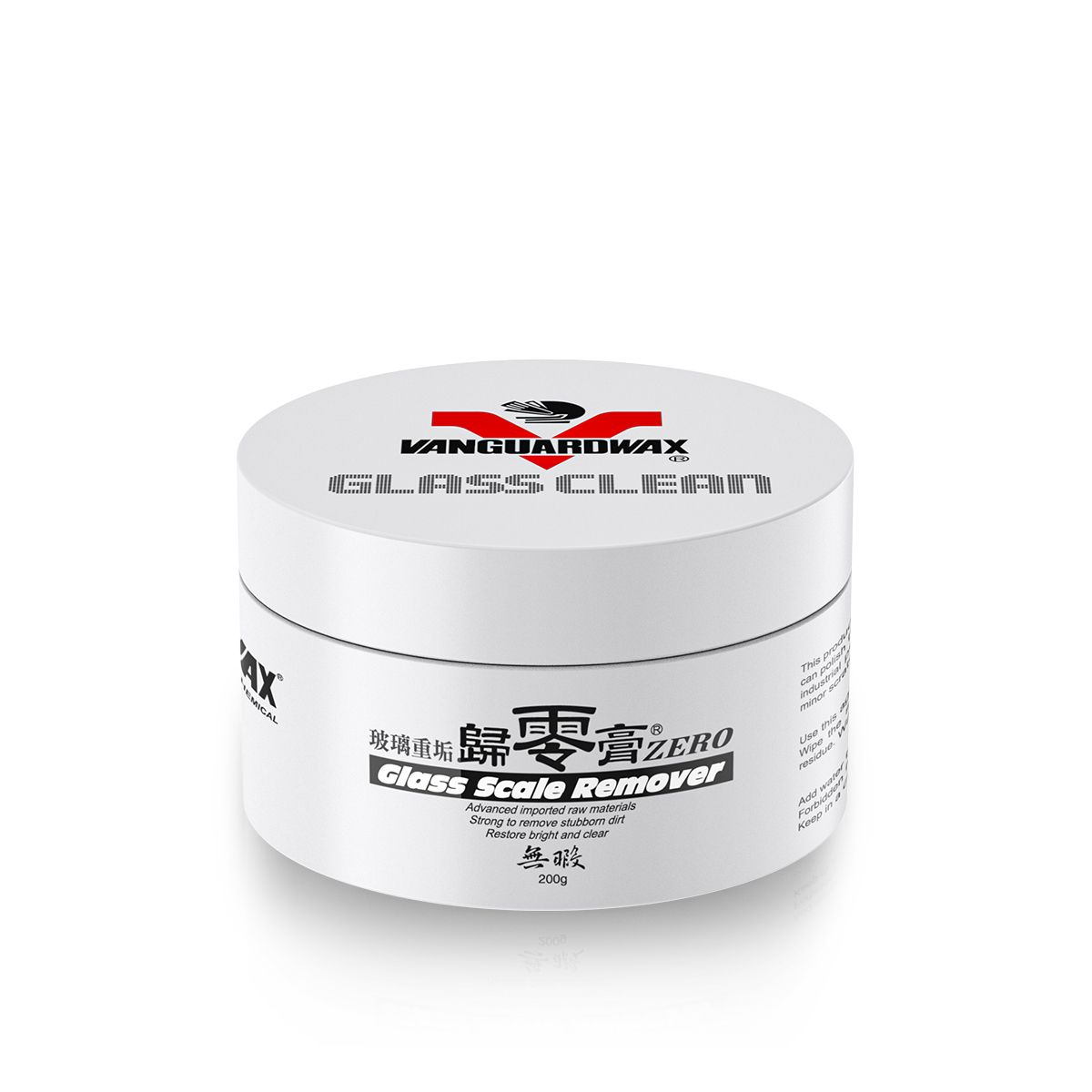
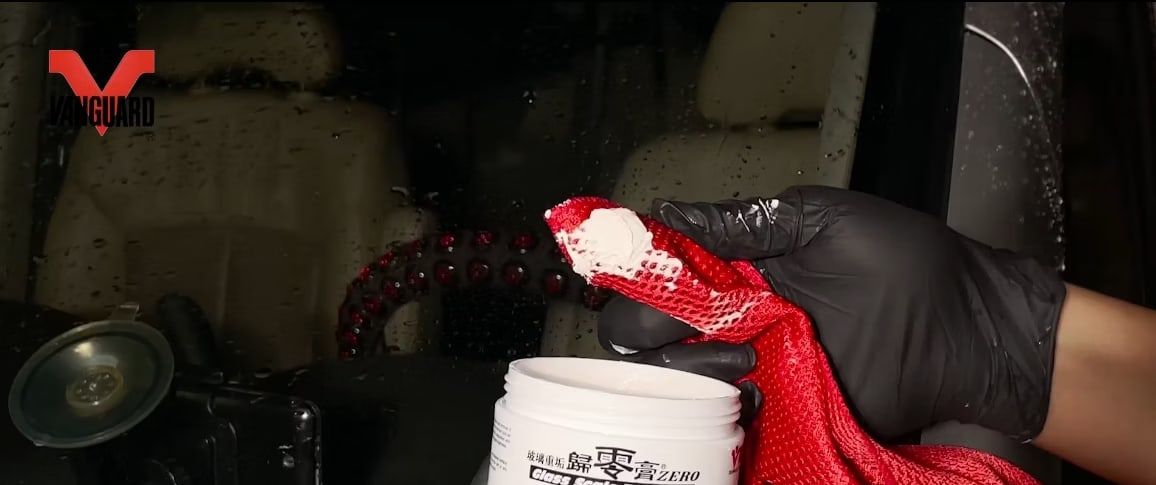
VANGUARDWAX's oil film remover, the Glass Scale Remover paste, is made for exactly this. It eliminates oil film and leaves the glass in an even, hydrophilic state.
What are the risks of leaving oil film on the glass?
Water repellency fails in the rain, which affects your view through the glass.
Oil film can also be one of the factors behind wiper judder.
And glass carrying oil film holds onto water spots and scale, so marks build up instead of rinsing off.
How do you use a glass scale remover paste?
Start by cleaning the sand and dust off the glass surface.
You do not have to dry the glass completely first. Work with the applicator in a slightly damp state.
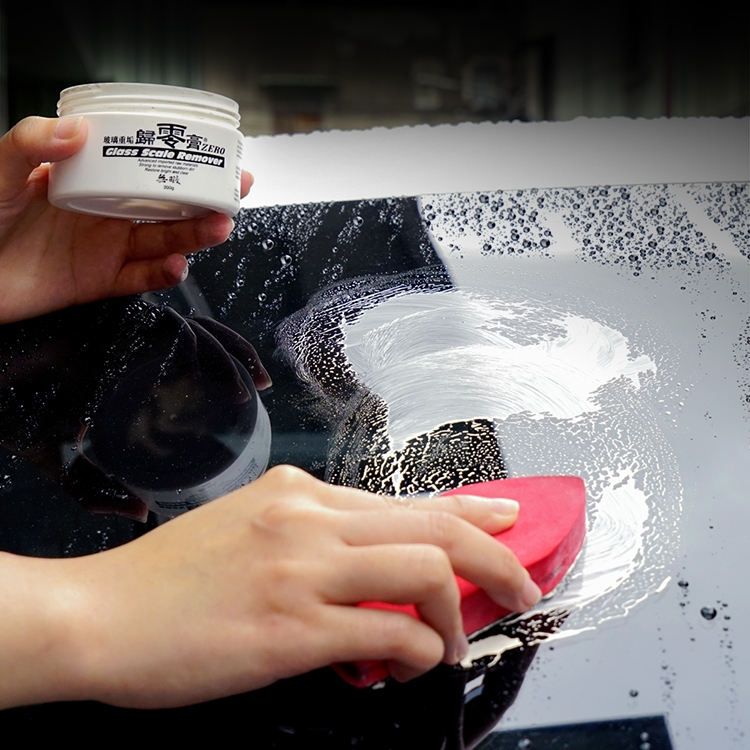
Pick up some paste — the product has a paste-like consistency. If the mix feels too dry as you work, add a little clean water.
Rub it over the glass with moderate pressure. Where the paste smears and blooms out, oil film is still present, so keep working that area until it stops blooming.
How do you know the oil film is gone?
When the glass takes on an even, misty appearance, pause and observe it for a moment. That pause is deliberate: it lets you see whether any remaining oil film shows itself by blooming again.
Once the surface stays even, use the same applicator with clean water to wash the paste off. The glass will turn noticeably clearer and show a hydrophilic, water-loving surface.
What should you do after the oil film is removed?
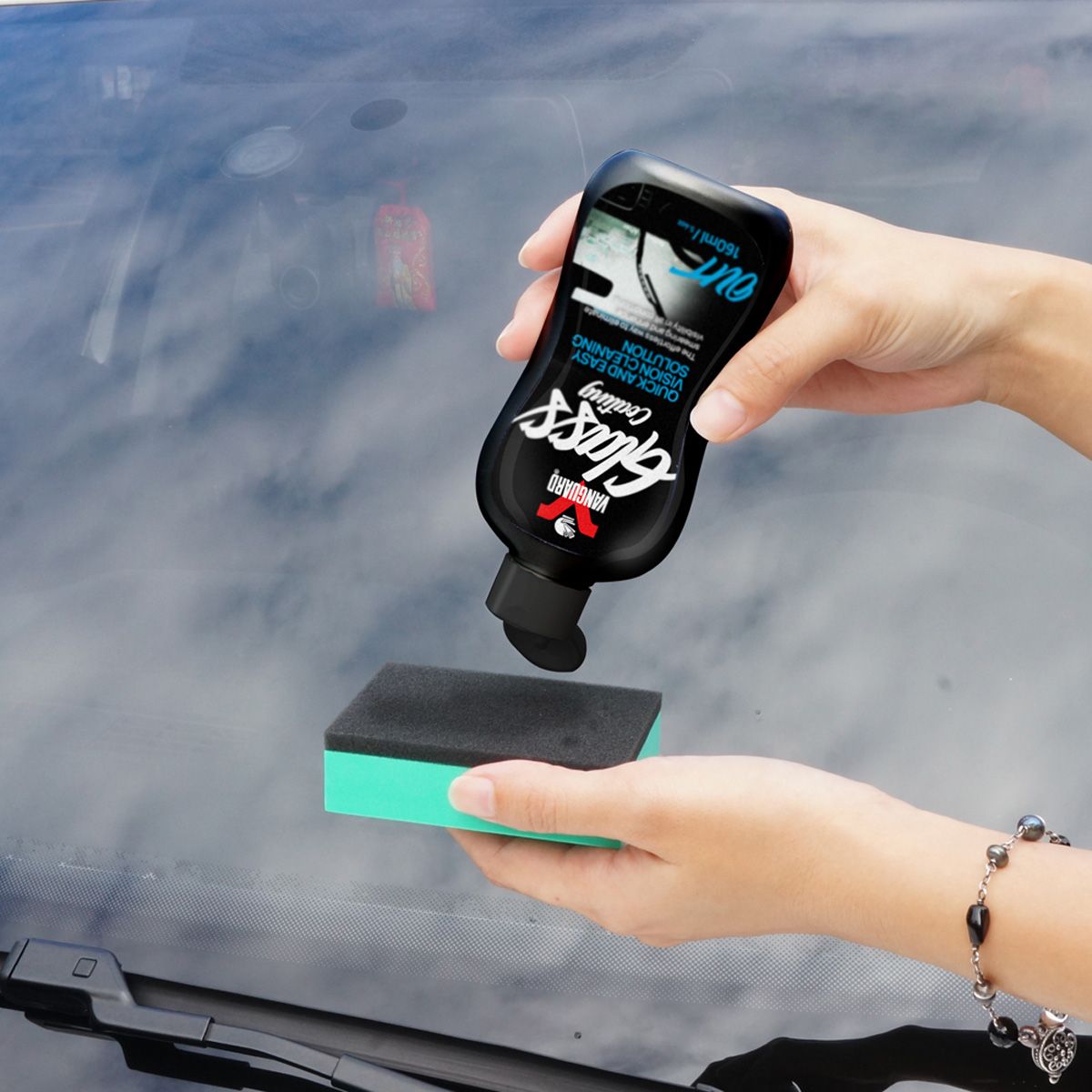
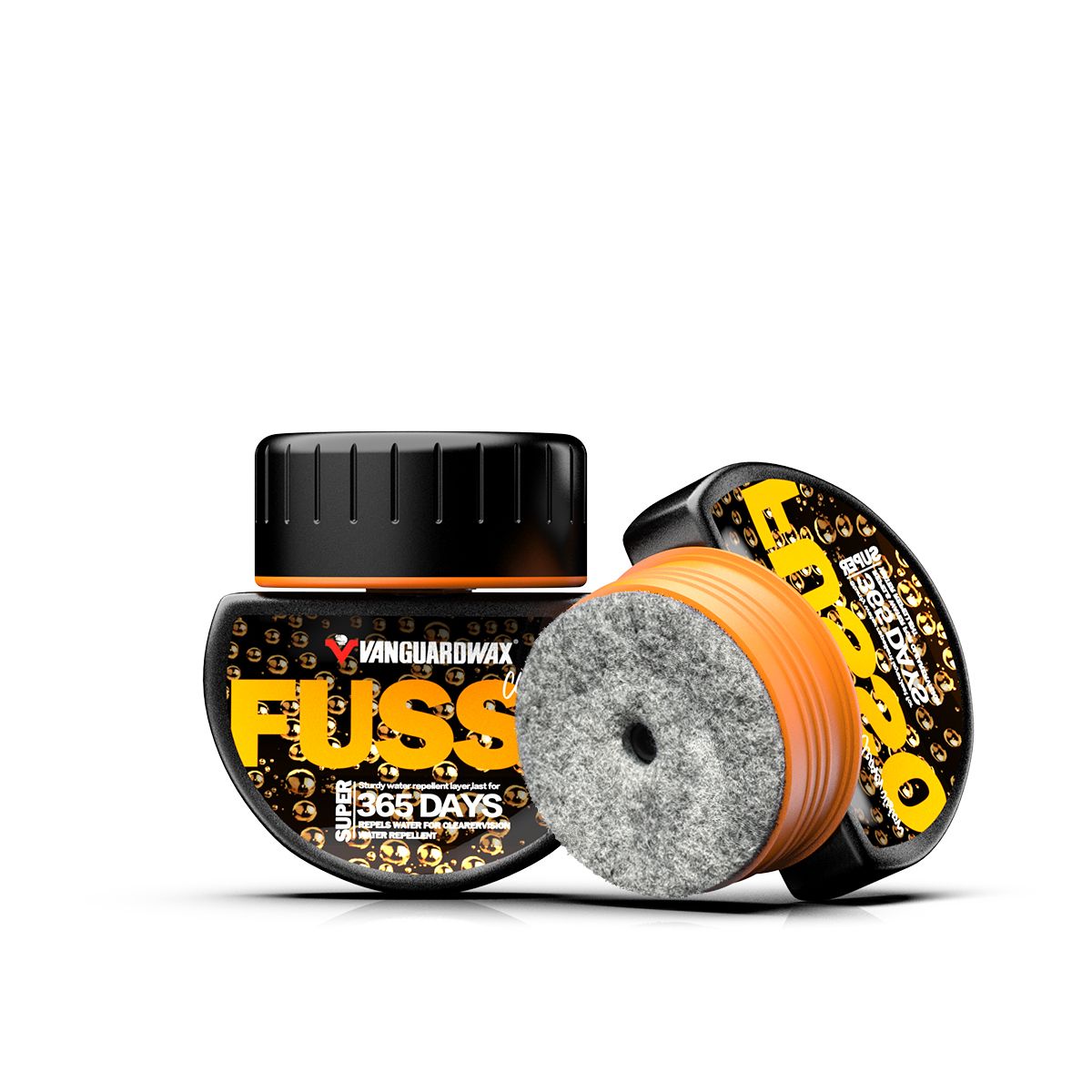
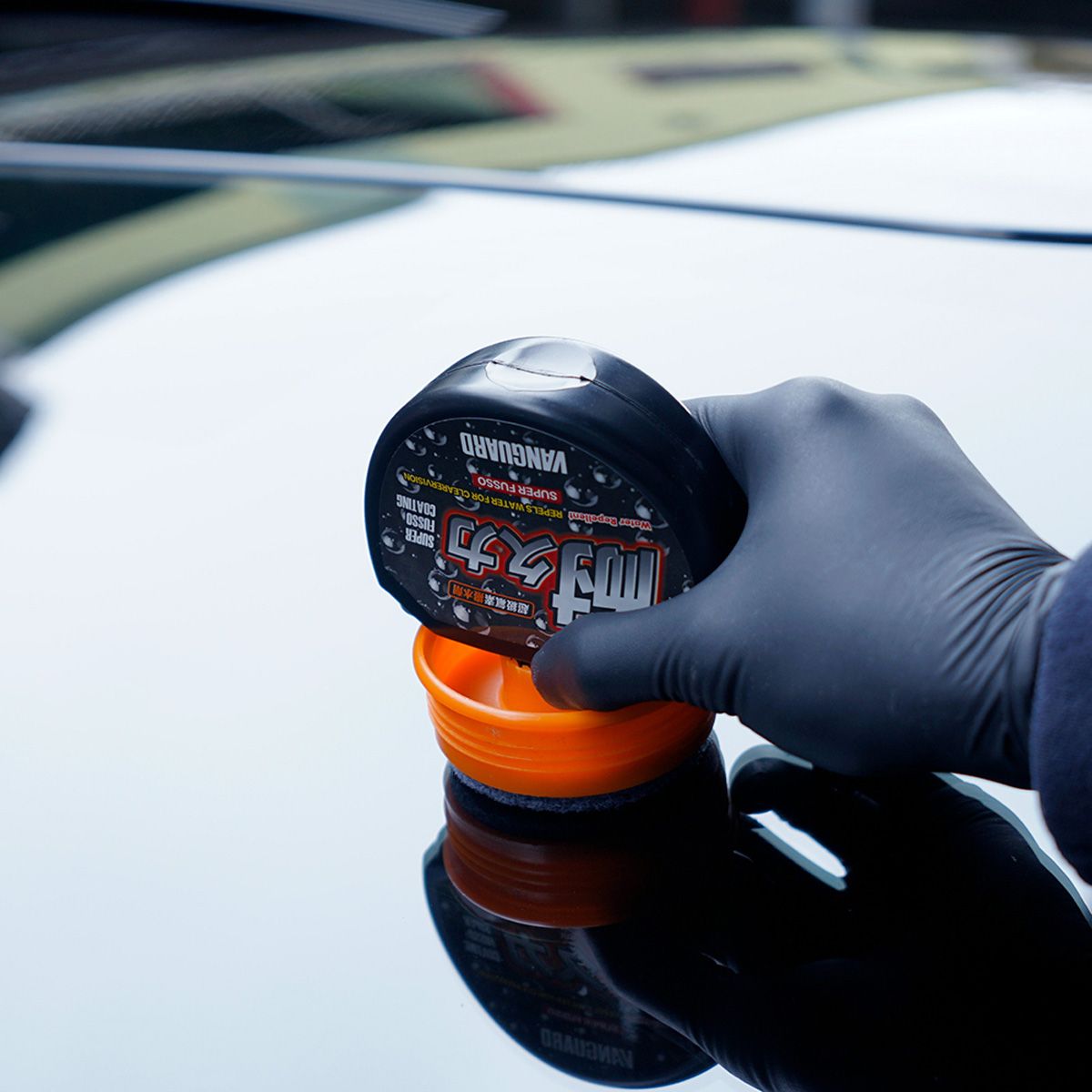
Re-apply a water repellent. Without one, water patterns can interfere with your view through the glass.
A water repellent drains water off the glass quickly, and it also reduces how easily oil film and grime can attach to the surface in the first place.
Can you use it anywhere other than a windscreen?
Yes — the same paste is useful on household glass with the same kinds of problems.
Cooking oil mist settles on kitchen cabinet glass, and the paste removes that greasy grime effectively.
Bathrooms are the other case: water left behind over a long period builds into stubborn scale. You can clean the same area repeatedly until it is completely gone, which is what makes the paste effective on stubborn deposits and water marks.