Cleaner Wax vs Finishing Wax: What Is the Difference?
A cleaner wax removes what shampoo leaves behind; a finishing wax protects and adds gloss. Here is how to tell which one your paint needs today.
لم تُترجم هذه الصفحة بعد وتُعرض بالإنجليزية.
A cleaner wax cleans the paint; a finishing wax protects it. Cleaner waxes carry either mild abrasives or cleaning powders that lift what shampoo cannot, such as water spots, water scale and light oxidation. A finishing wax contains no abrasive at all: it masks fine scratches, forms a protective film over the clear coat and boosts gloss. In practice you clean first, then protect.
Why does the order matter?
Ordinary dust and water marks sit on top of the panel and come off with car shampoo. Harder contamination, such as water spots, water scale and oxidised paint, does not. A foam wash simply will not remove it.
If you skip that step and apply a finishing wax straight over dirty paint, whatever is still bonded to the surface will compromise the result to some degree. That is the whole argument for cleaning before you protect.
What is a finishing wax?
A finishing wax, sometimes called a beauty wax, contains no abrasive particles. What it does is:
- mask the fine scratches already in the paint
- form a protective film that covers the clear coat
- shield the surface from dirt and UV damage
- deepen and enrich the colour
- leave the paint glossier, with better water beading
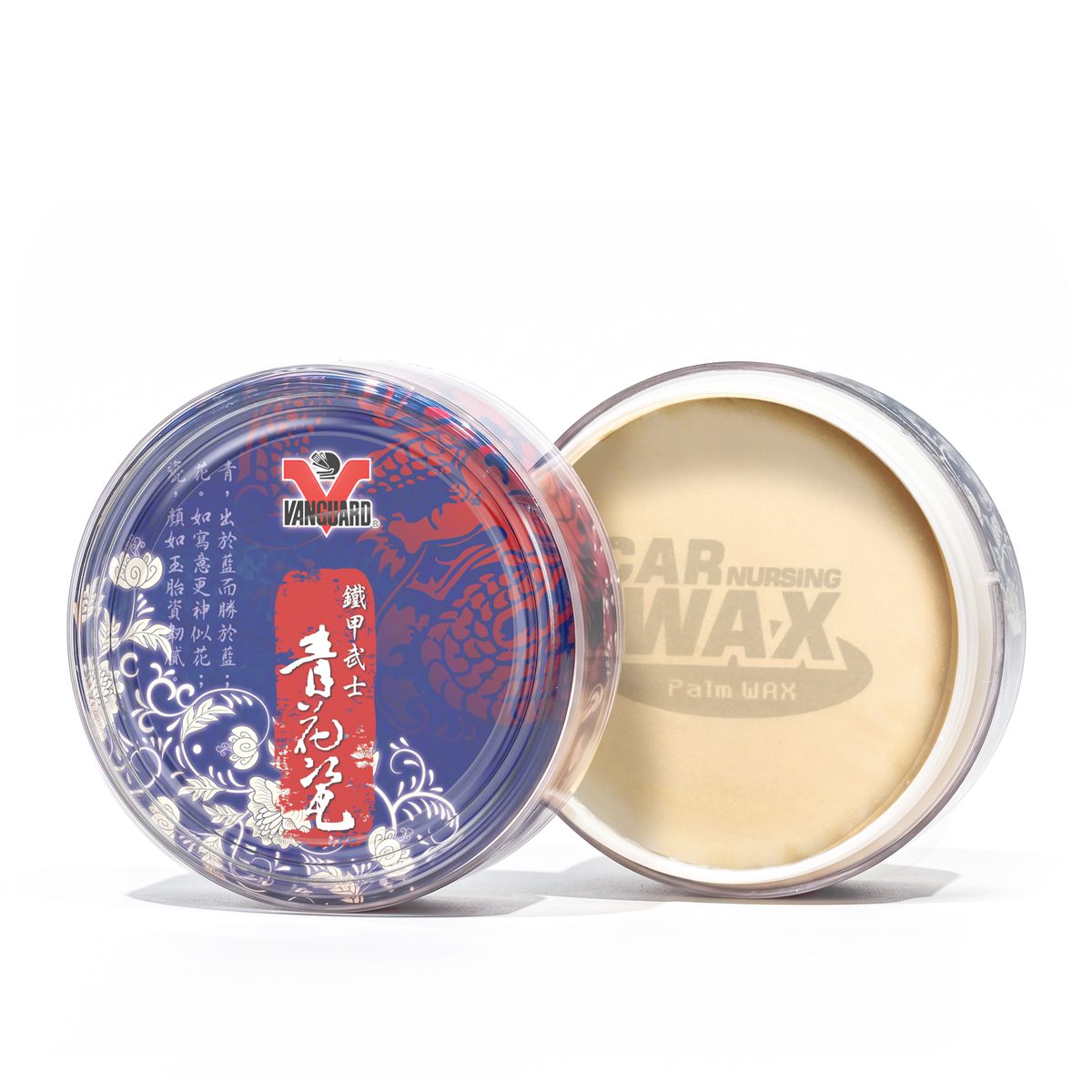
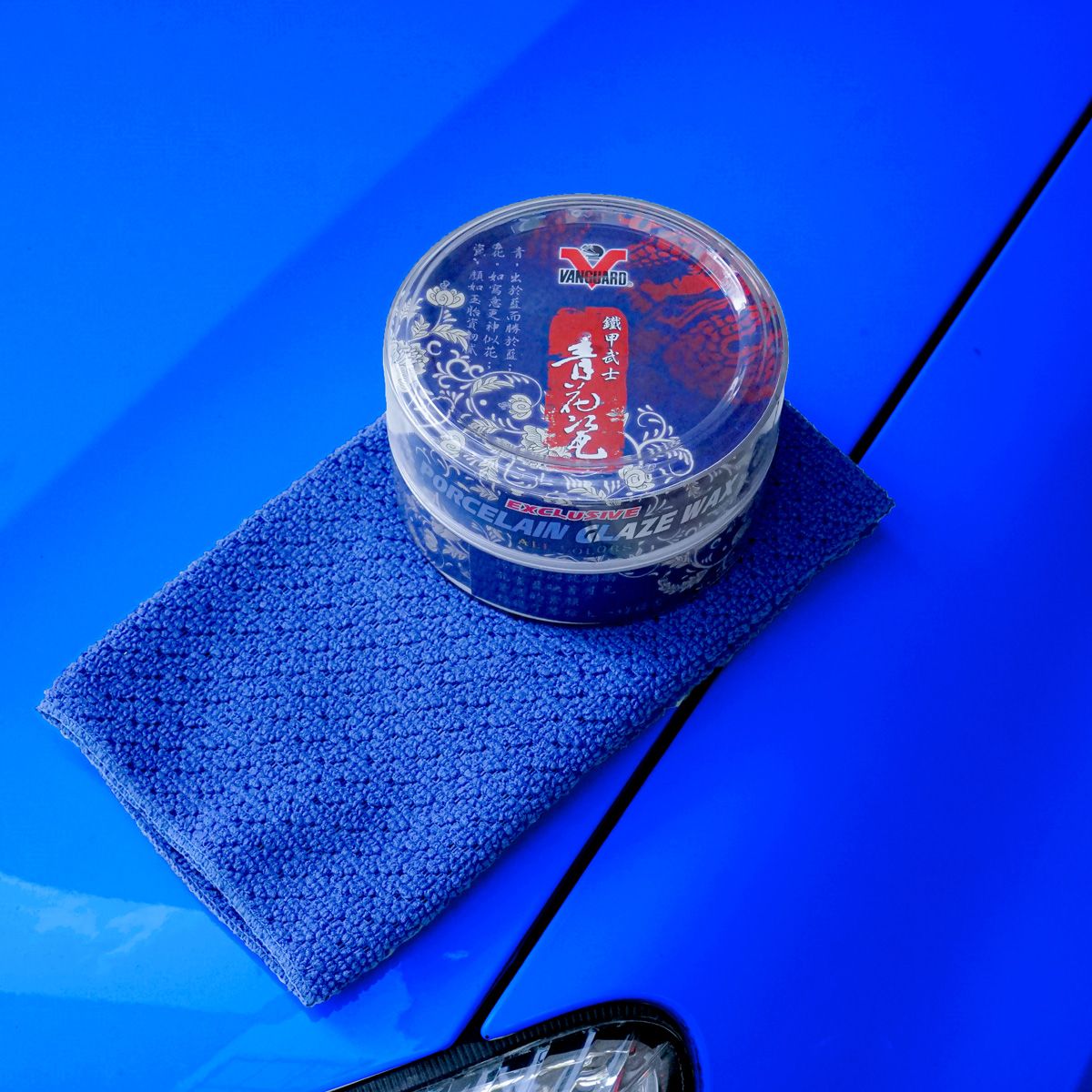
The masking effect comes from the carnauba content, which smooths over the fine lines in the surface so you no longer see them. VANGUARDWAX's Porcelain Glaze waxes belong to this category.
What is a cleaner wax?
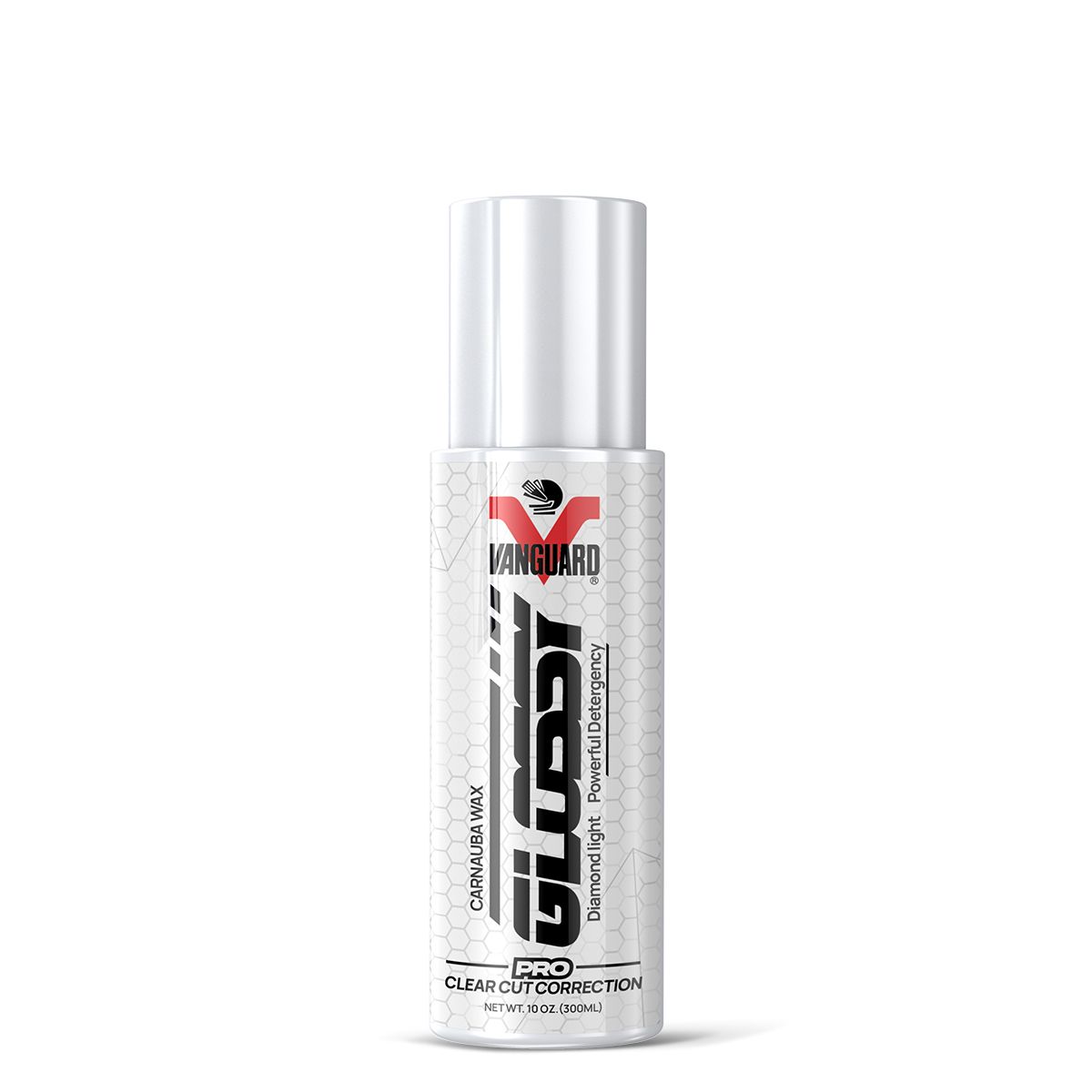
A cleaner wax contains a small amount of abrasive, enough to take surface contamination off the paint. That includes water scale and the grime that bonds on when a car has gone a long time without a wash, the sort of thing a foam wash will not touch. Broadly, cleaner waxes fall into two groups.
Which cleaner wax is safe on the whole car?
The first group is the prep and maintenance type. These have a lower abrasive content and can be used over the entire car. They deal with shallow water marks, water scale and paint oxidation, improve how smooth the surface feels and restore the colour.
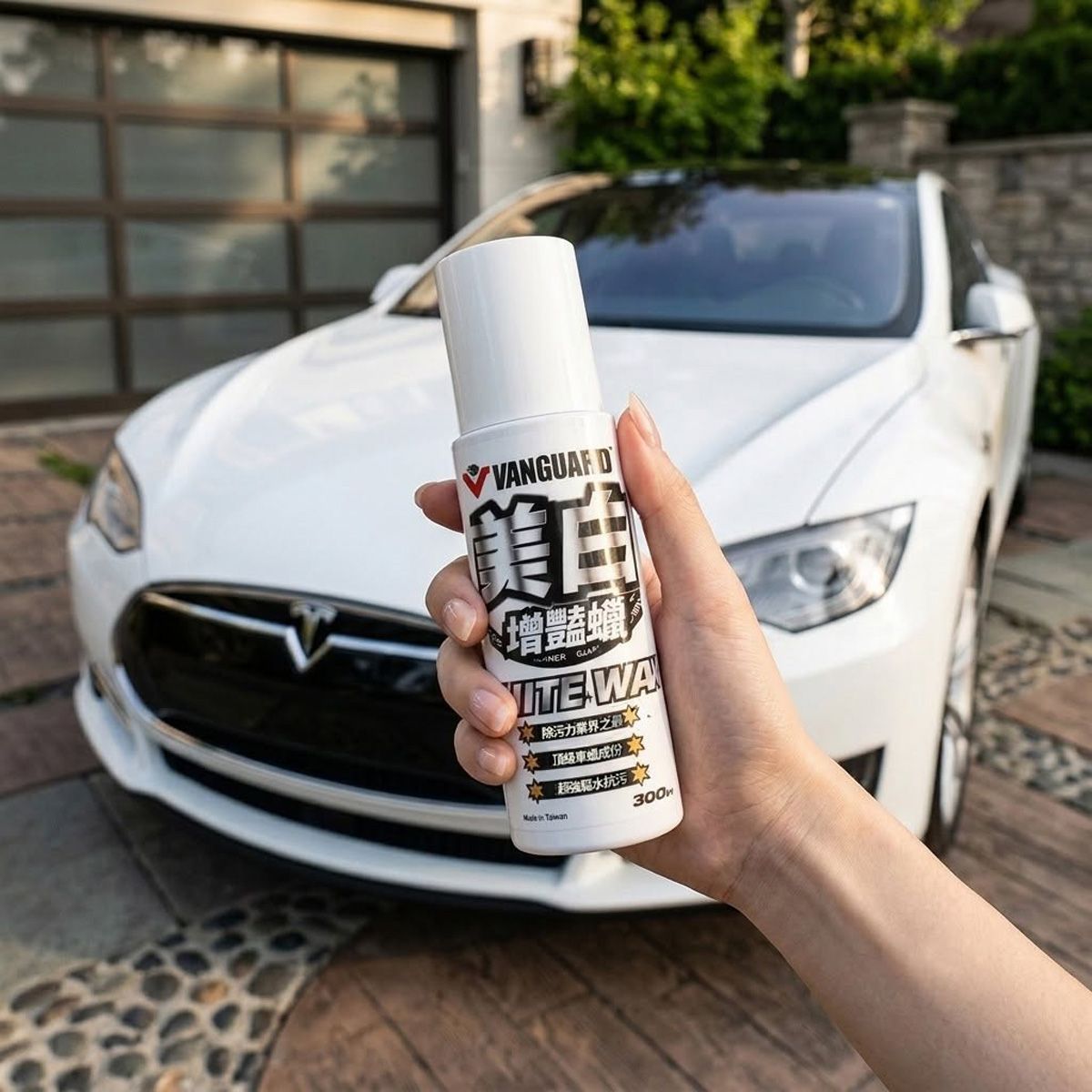
VANGUARDWAX's Whitening and Brightening Liquid Wax sits here. It contains no abrasive at all and relies on a cleaning powder to draw contamination out, so it is safe over the whole car. It also contains carnauba, which means that once you have finished you still get a protective effect on the paint. If you are short on time, this one product on its own is enough.
When do you need a corrective cleaner wax?
The second group is corrective. These cut harder and are aimed at scratch repair, so use them on the affected areas only. Overusing a strong cutting product can wear the paint and damage the clear coat.
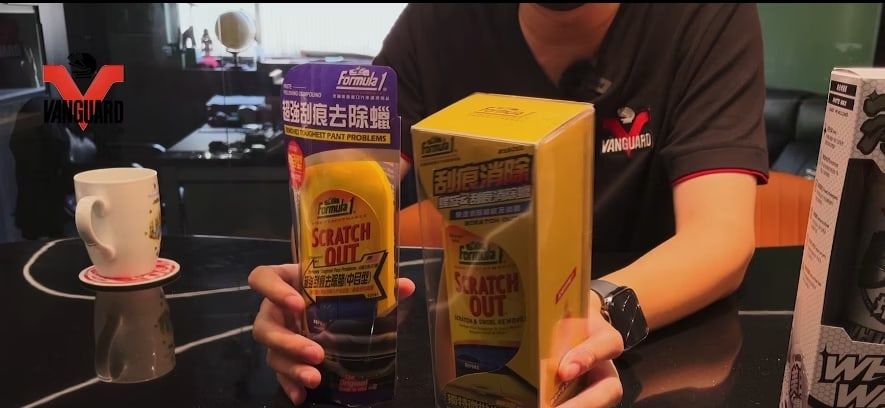
For scratches, work coarse to fine. A deeper scratch starts with a medium-cut product, which has stronger micron polishing particles, and is then refined with a fine-cut product to polish it out. If you are not confident, stay with the fine-cut product and level the mark slowly. Fine cut on its own is the lighter option and will handle everyday water scale, water spots and fine lines without much drama.
Can every scratch be fixed?
Check by eye and by touch. If the damage has gone through to the primer, stop. That is a job for a professional detailer, not for a wax.
Is a coarse compound just a stronger cleaner?
A lot of people reach for a coarse compound as a cleaning product. It cleans powerfully, but used over the long term it will damage the clear coat, so it is not something to use on the whole car. If you genuinely need it, keep it to the affected area.
How often should you use a cleaner wax?
Not on a schedule. Use the wash itself as the inspection: while the car is clean and wet, check the paint for water marks, oxidation or grime that would not come off. If you find any, that is when a whitening or cleaning product earns its place.
Should you still apply a finishing wax afterwards?
Yes. Think of it the way you would think of exfoliating and then moisturising skin. After a cleaner wax, apply a layer of finishing wax to protect the paint you have just cleaned.
Different people have different care routines, and formulations vary from brand to brand. The most important thing is to follow the instructions on whichever product you are using.