Say Goodbye to the Annoying Oil Film on Your Glass
A hazy windshield that makes wipers judder is not dirt — it is oil film built up over years. Here is how to strip it and follow up with a water-repellent coating.
Esta página aún no está traducida y se muestra en inglés.
The windshield is one of the hardest parts of a car to maintain. Exhaust residue, road spray and leftover detailing product slowly bake onto the glass under years of sun exposure, forming an "oil film" that won't wipe away. The result: rain is hard to clear, the wiper judders, and vision stays blurred even at top wiper speed. Removing that film isn't optional — it affects driving safety.
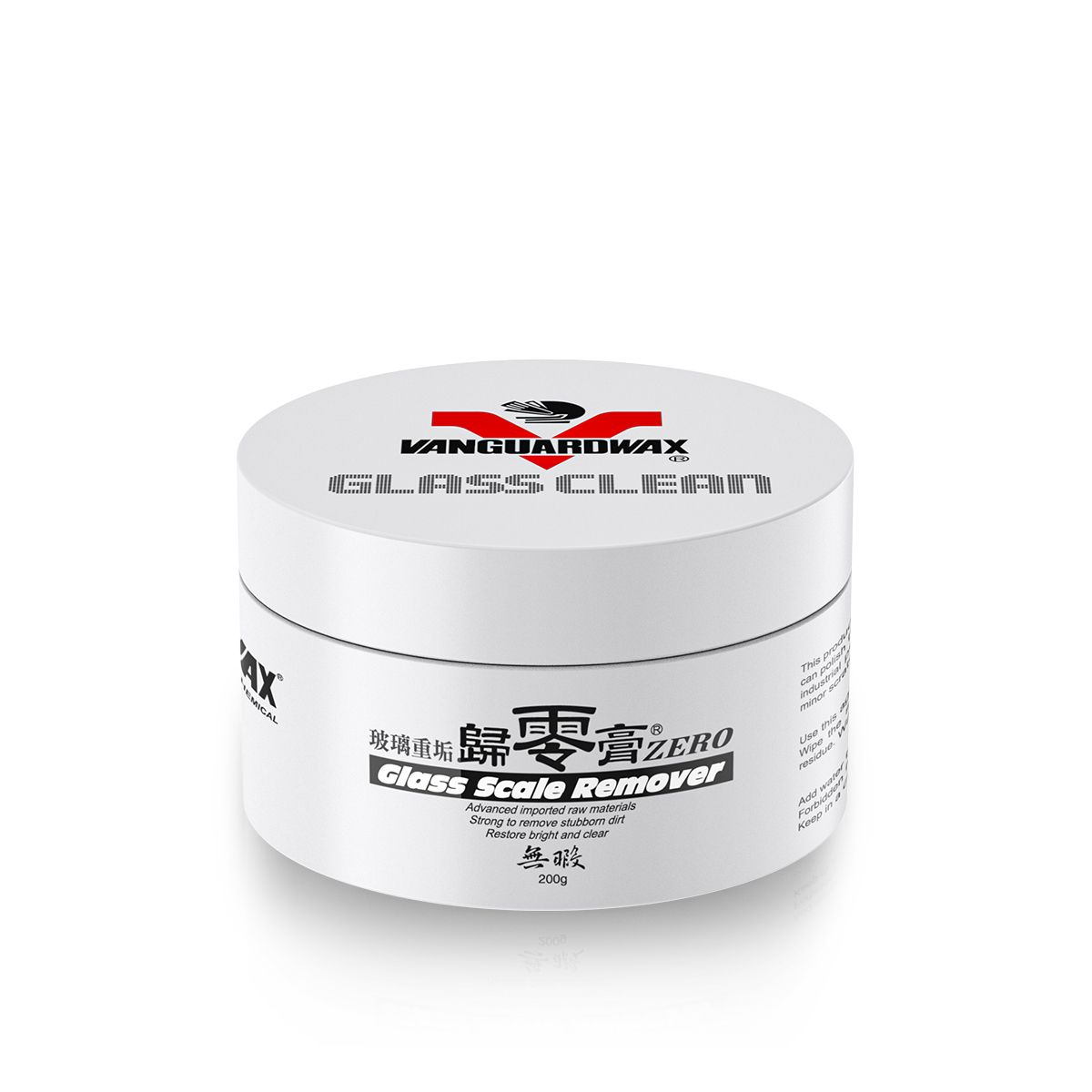
How to use an oil film remover
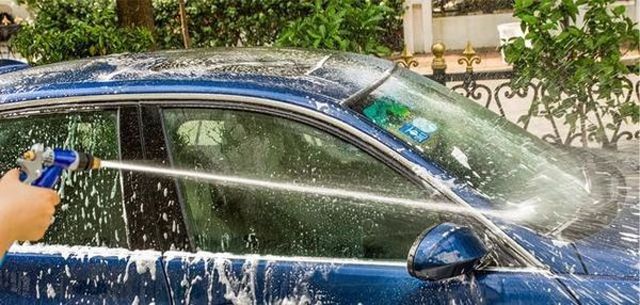
- Rinse the glass with clean water and keep it slightly wet.
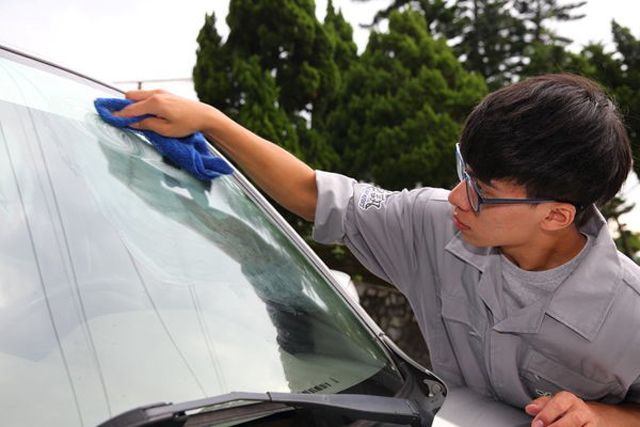
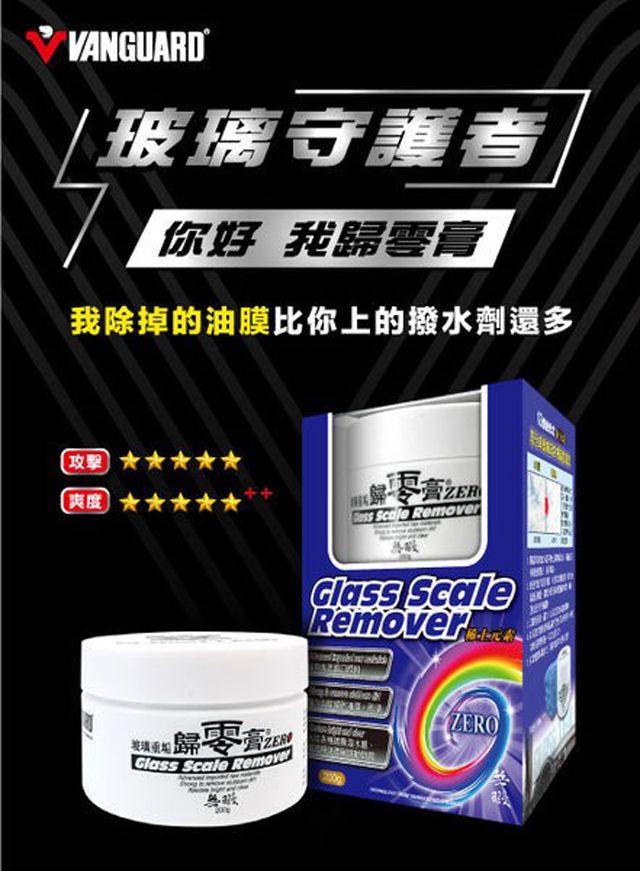
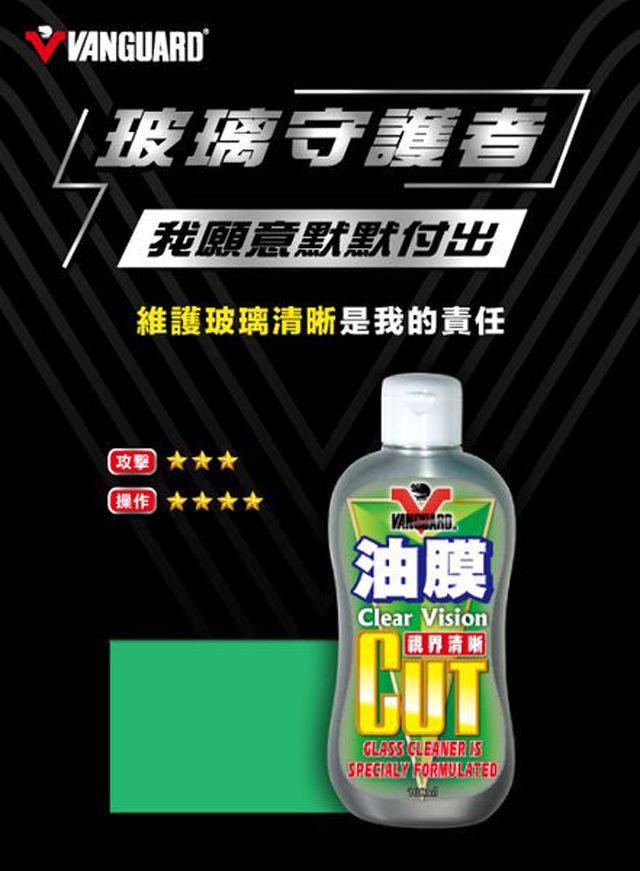
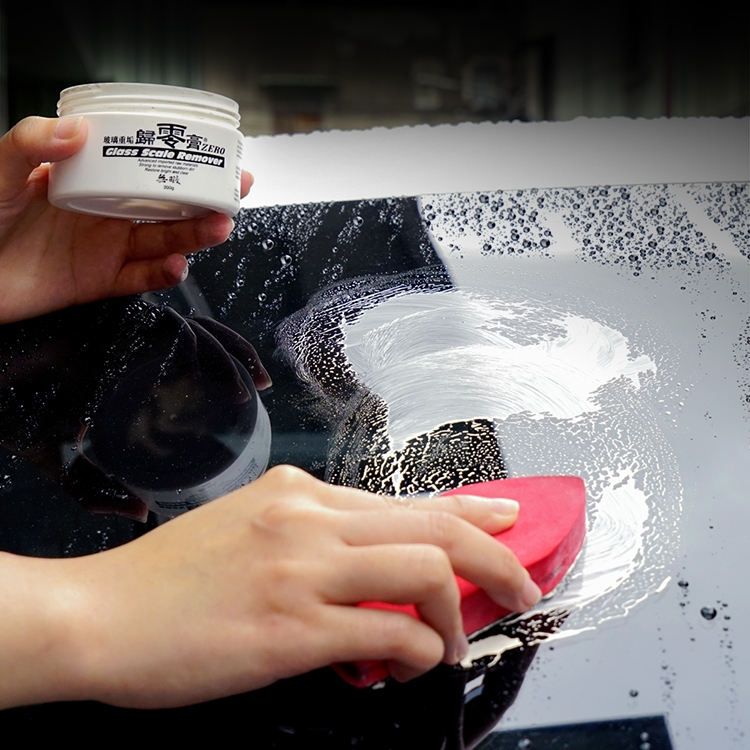
- Pour an appropriate amount of oil film remover onto a microfiber cloth and work it into a small area using small, concentric circles.
- Rinse with clean water and dry with an absorbent cloth.
What you'll need: a suitable glass oil film remover, a microfiber cloth, an absorbent cloth, and clean water.
Benefits:
- Thoroughly removes stubborn rain scale and oil film.
- Prevents wiper judder and the noise that comes with it.
- Improves wiper performance and service life.
- Won't scratch the glass.
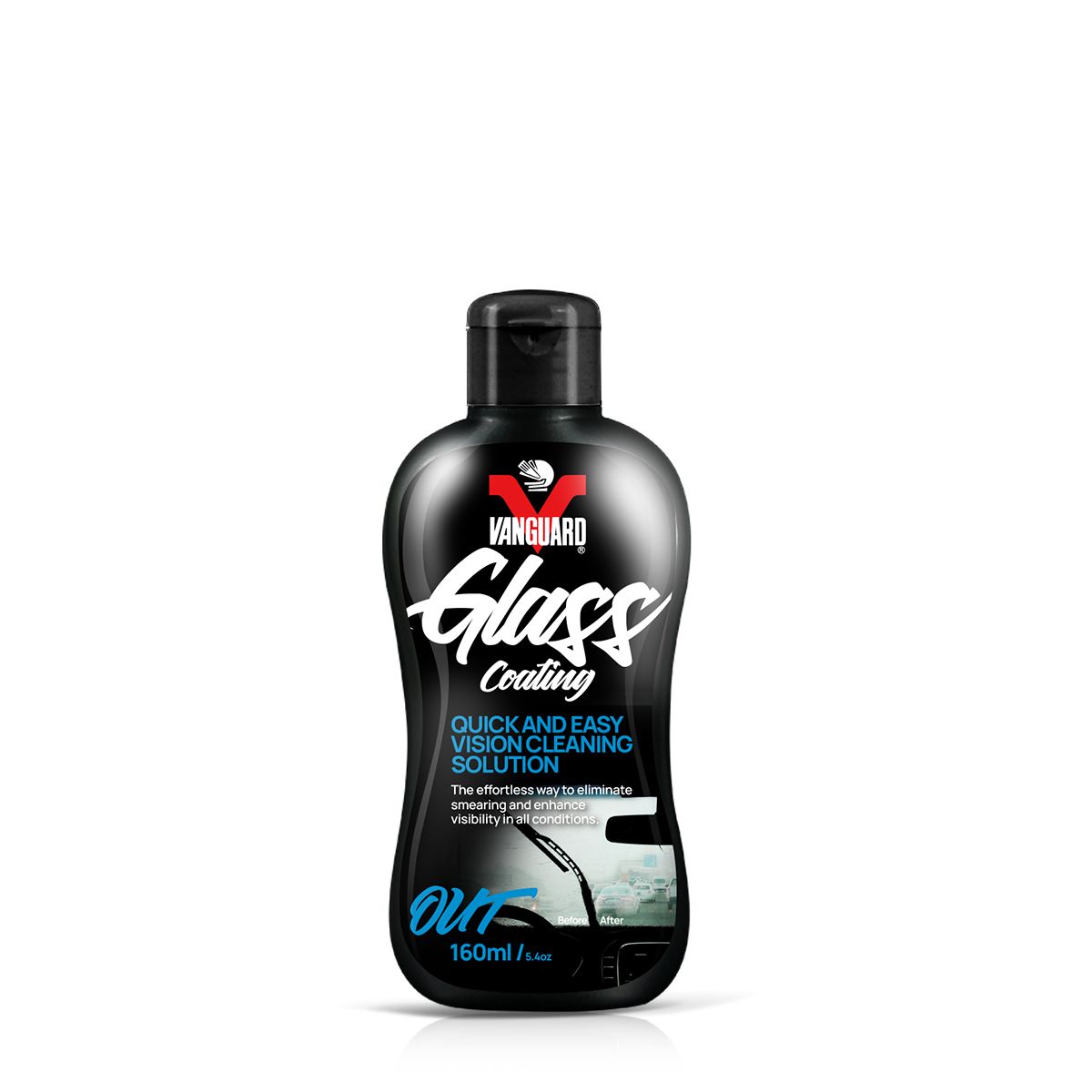
Removing the oil film isn't the end of glass maintenance — the next step is a water-repellent coating on the now-clean windshield to form a protective layer. The repellent effect works by filling the glass's microscopic pores with a chemical layer; when rain touches the surface it beads immediately and slides off.
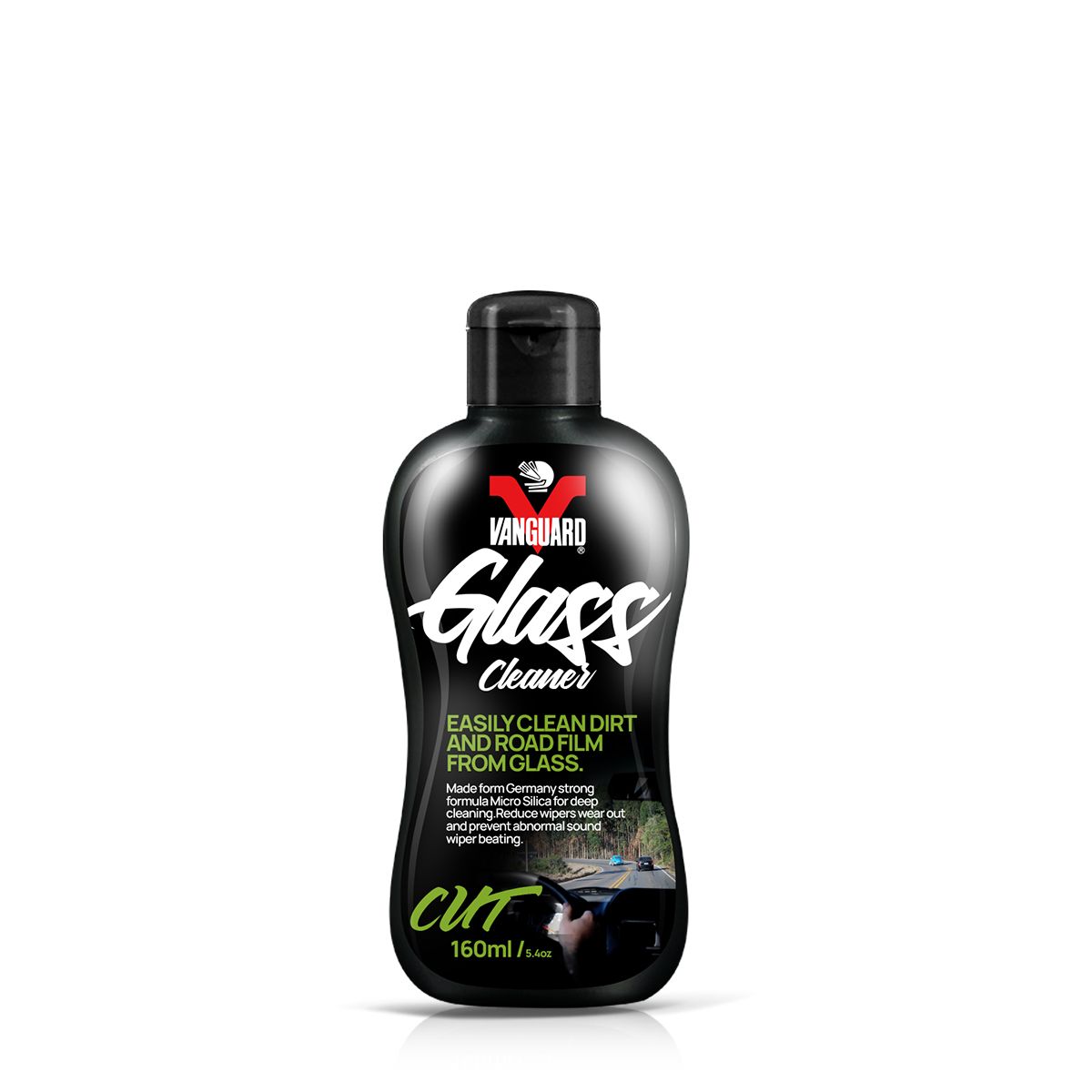
How to apply a glass water-repellent coating
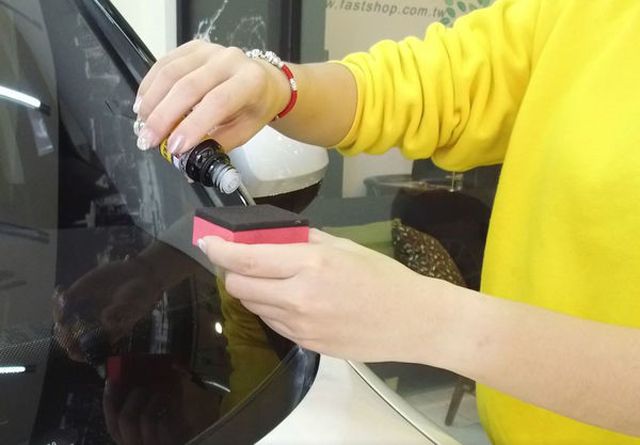
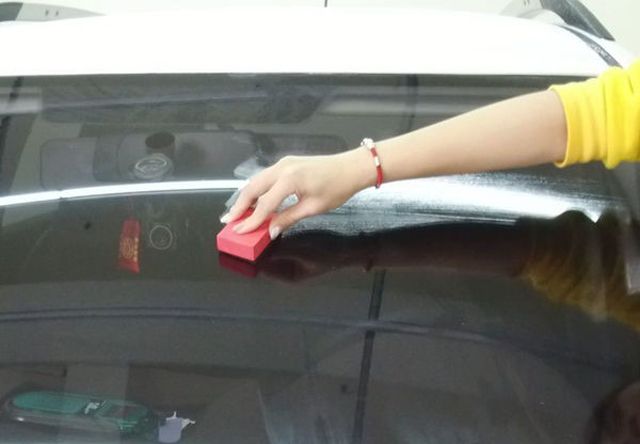
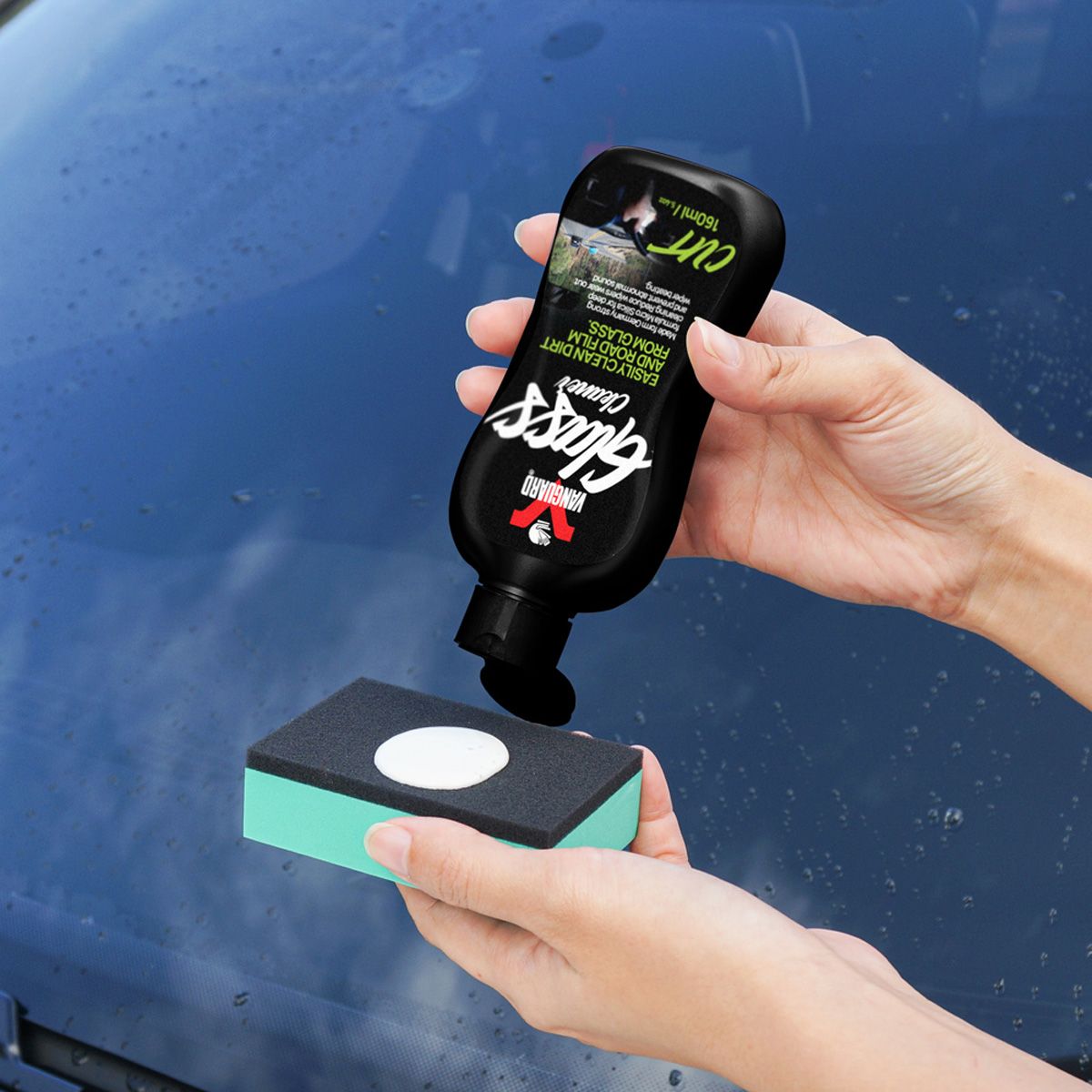
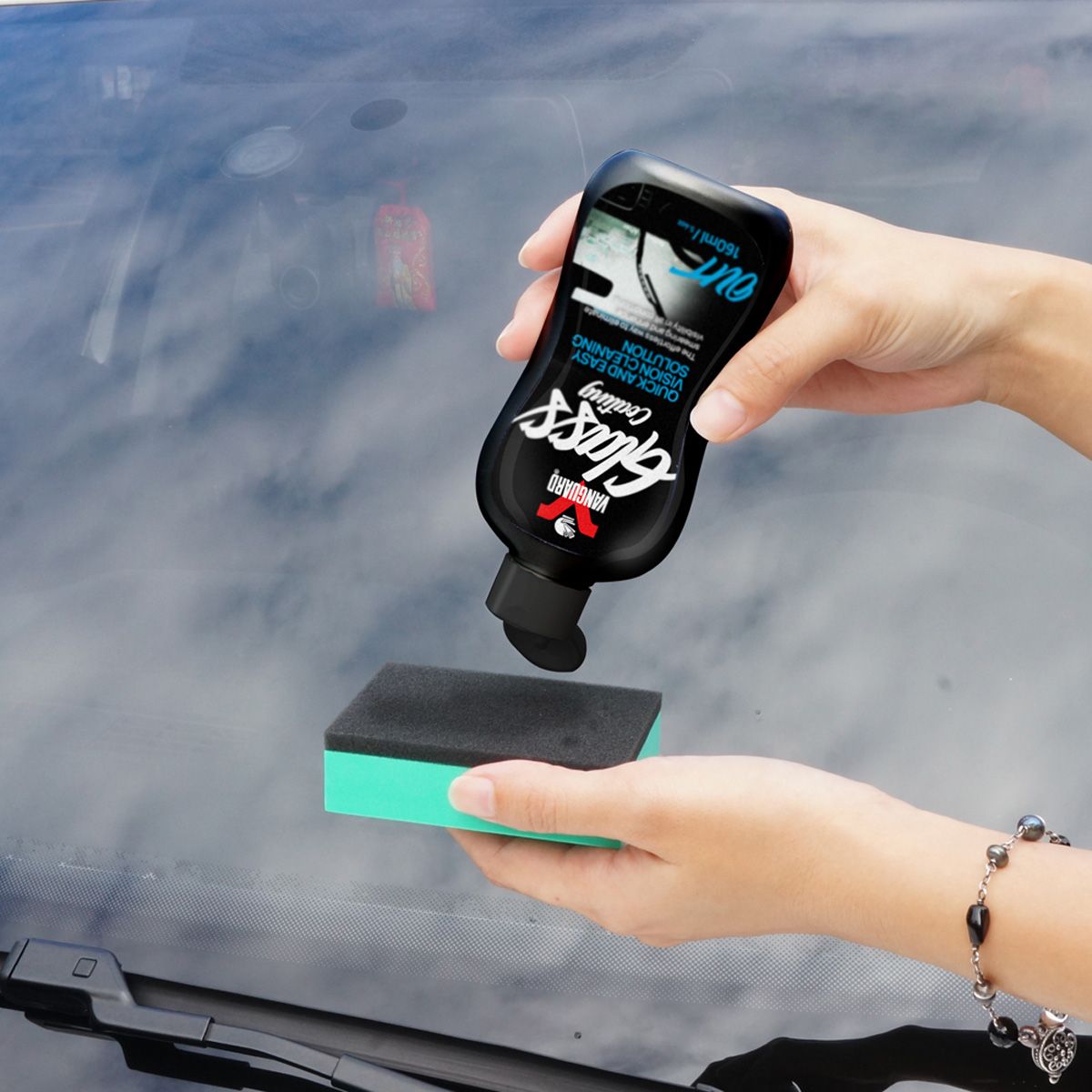
- Pour an appropriate amount of coating onto a sponge and work it back and forth across the windshield in a tic-tac-toe pattern.
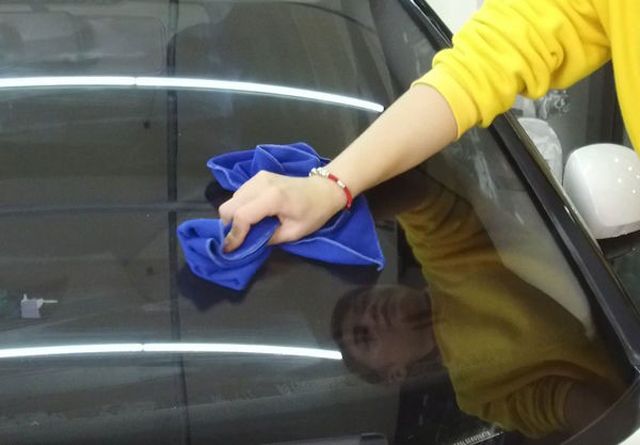
- Wait 5–8 minutes for the coating to dry and cure, then buff the windshield with a microfiber cloth until clear.
What you'll need: a suitable glass water-repellent coating, an application sponge, and a microfiber cloth.
Benefits:
- You won't need to run the wipers at speed — rain slides off naturally and keeps your line of sight clear.
- The anti-fouling property makes it harder for dirt and oil film to stick to the glass.
- Wiper motion becomes smoother, extending wiper service life.
A clean windshield doesn't just give the driver a clear view — it adds a real margin of safety on the road.